For the past few weeks, I’ve checked in every night. I rate my sleep, movement, and how well I fueled my body, then note my energy and mood for the day.
One Sunday, I slept badly. On Monday, my energy and mood dropped. Nothing else had changed: same work and same family. When I slept well again on Tuesday and Wednesday, both numbers bounced back.
This is just one example, so it doesn’t prove anything. Still, it’s a good reminder: sometimes we blame our mood on everything, when it might just be last night’s sleep.
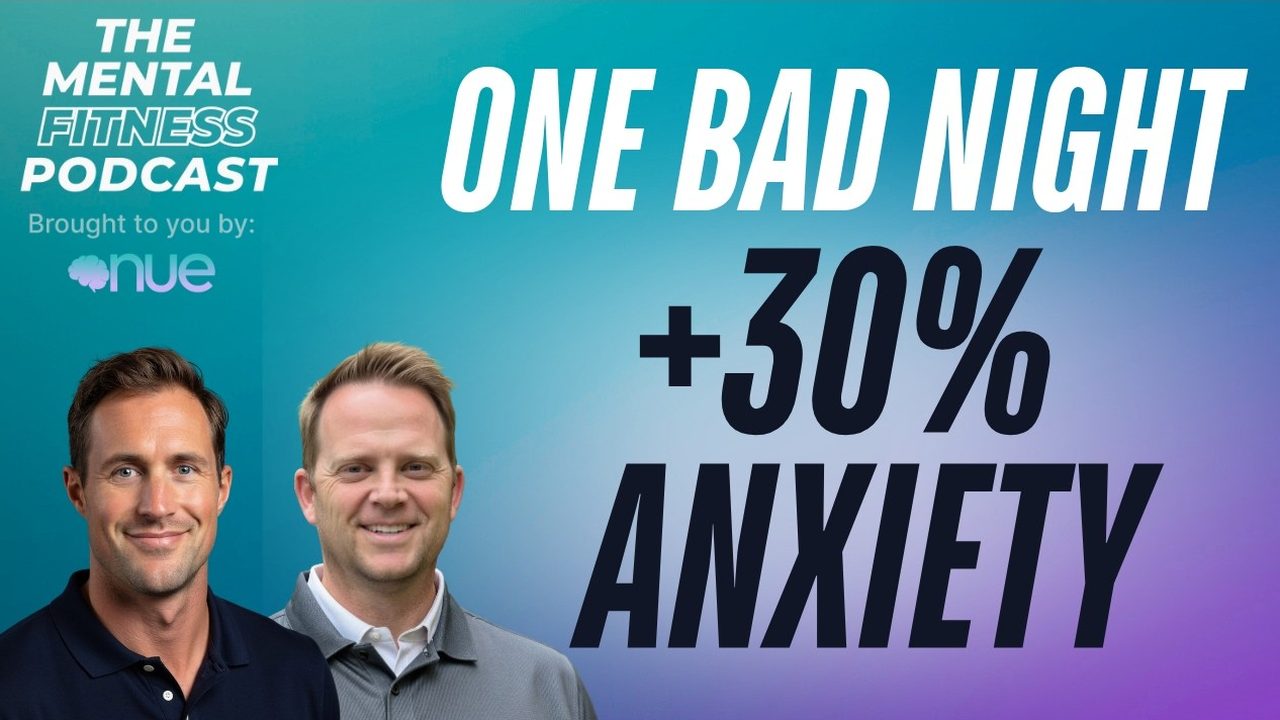
In a recent Mental Fitness Podcast episode, Dave Barney and I discussed the basics: sleep, movement, and food. We often try to fix how we feel by changing our mindset, using an app, or taking a pill. But many mental struggles actually start in the body. If your foundation isn’t solid, everything else feels unstable.
This isn’t an argument against therapy or medication. Think of it as “biology first,” not “biology only.”
What We Resolve to Do
At the end of 2023, the American Psychiatric Association asked about New Year’s resolutions. Of those making mental health resolutions, 67% wanted to exercise more and 49% planned to meditate. Fewer chose spirituality, therapy, reducing social media, or journaling.
Sleep didn’t even make the list, even though it has some of the strongest evidence for affecting how you’ll feel tomorrow.
That’s not surprising. We go for things that feel like action, like apps or supplements. Going to bed early doesn’t feel exciting, and no one celebrates it. No one runs ads for an early bedtime.
Quick fixes make us feel like we’ve solved the problem today. Building a foundation is slower and less exciting, and you have to keep working on it.
Most of us aren’t building that foundation. By 2018, only about 16% of American adults met both the exercise and sleep guidelines for their age. About 30% met neither.
People serious about training know this. No one starts with supplements or pre-workouts before they’re sleeping and exercising well, because recovery is when the body adapts.
Sleep: One Bad Night Can Raise Your Anxiety
If I had to pick one to fix, it would be sleep.
In a UC Berkeley study, researchers kept 18 healthy young adults awake all night. The next day, their anxiety jumped by up to 30%. Brain scans showed that a part of the brain that helps calm anxiety went quiet after no sleep. More deep sleep meant less anxiety the next day.
So if you slept badly and feel anxious, it doesn’t necessarily mean something is wrong with your life. Your brain just has less capacity to manage emotions.
On a rough day, ask yourself how you slept before worrying about everything else.
My co-host made a great point: when he’s been sleeping well, one rough night just makes him tired. But two bad nights in a row, especially when he’s already stressed, really hit hard.
Movement: A Little Goes a Long Way
A 2022 study in JAMA Psychiatry looked at more than 190,000 adults. People who got about two and a half hours of brisk walking a week had a 25% lower risk of depression than people who did nothing. Even half that amount came with an 18% lower risk, with the biggest benefits coming from simply getting started.
Half that dose is about 11 minutes a day. A 10-minute walk after lunch or dinner gets you most of the way. No need to become a runner.
If time is tight, pair your walk with something you already do. Call a friend or listen to an audiobook. Or use the time to clear your head.
Fuel: Food Added to Treatment
The SMILES trial, led by Felice Jacka and published in BMC Medicine in 2017, recruited 67 adults with moderate to severe depression. Half got 12 weeks of coaching toward a modified Mediterranean diet, with more whole foods and fewer processed foods and sweets. The other half got social support instead. By the end, 32% of the diet group had reached remission, compared with 8% of the social support group.
Most participants were already on antidepressants, in therapy, or both. The diet didn’t replace their care. It added to it, and they improved.
You don’t need a strict plan. Just eat more whole foods, fewer ultra-processed ones, and drink enough water.
Each One Pulls on the Others
Sleep, movement, and food work in a loop. When I move during the day, I sleep better. One psychologist says you have to earn your sleep, and I’ve lived by that ever since.
It works the other way, too. After a bad night, I crave sugary food and usually skip my workout.
One weak link drags the others down. One strong link lifts them up. You don’t need to fix everything at once. Start with your weakest area, and often the rest will follow.
When It’s More Than a Rough Patch
Telling someone to “just sleep more or go for a walk” can sound dismissive if they’re dealing with real depression. We don’t want this to come across as “you don’t need help, just walk it off.”
The point is to make sure any help you get has a solid foundation. Medication and therapy matter. For some, they make it possible to sleep, move, and eat well in the first place.
In an earlier episode, Dr. Karen Manotas, a child and adolescent psychiatrist, walked us through how to tell a rough patch from something more serious. She starts with function: whether you can still do what you normally do, and how much effort it takes. If that’s slipping, don’t wait out a 14-day experiment. Get help now.
Put it into practice
Try the 14-Day Baseline Check
- Each night, rate three inputs: sleep, movement, and how you fueled. It takes about 10 seconds.
- Also rate two outputs: your energy and your mood.
- Keep it up for 14 days, and date every entry. Two weeks is long enough to show a pattern and short enough to finish.
- On day 14, look at your best and worst days. Which input moved your mood the most? For me it’s sleep, but yours might be different.
- Fix the weakest lever first, just that one, then run the check again.
Two things can throw it off. Weekends are looser for most of us, so if your logging falls apart on Saturday, your routines probably do too. And one bad night is noise, which is why the check runs for two weeks.
You don’t need anything fancy to run this. A pen and a notebook work fine, and so does the notes app on your phone. If you want it even easier, the check-in is already built into NUE, the mental fitness app. The daily check-in is part of your routine by default. Each day you rate your sleep, movement, and fueling, plus your energy and mind, in a few taps. Every entry is dated and saved in one place, so when day 14 comes you’re reading your record, not trying to rebuild it from scattered notes.
Ready to start your practice? Meet NUE →
Not ready for an app? Follow the podcast on Instagram for one idea from every episode.

Scan to open NUE on your phone
Start Tonight
Most of us were taught to fix our minds from the top down. The foundation is quieter. You rarely notice a good night’s sleep, only the bad ones.
Tonight, rate your sleep, movement, and food. After two weeks, look for patterns. You can’t fix what you never track.