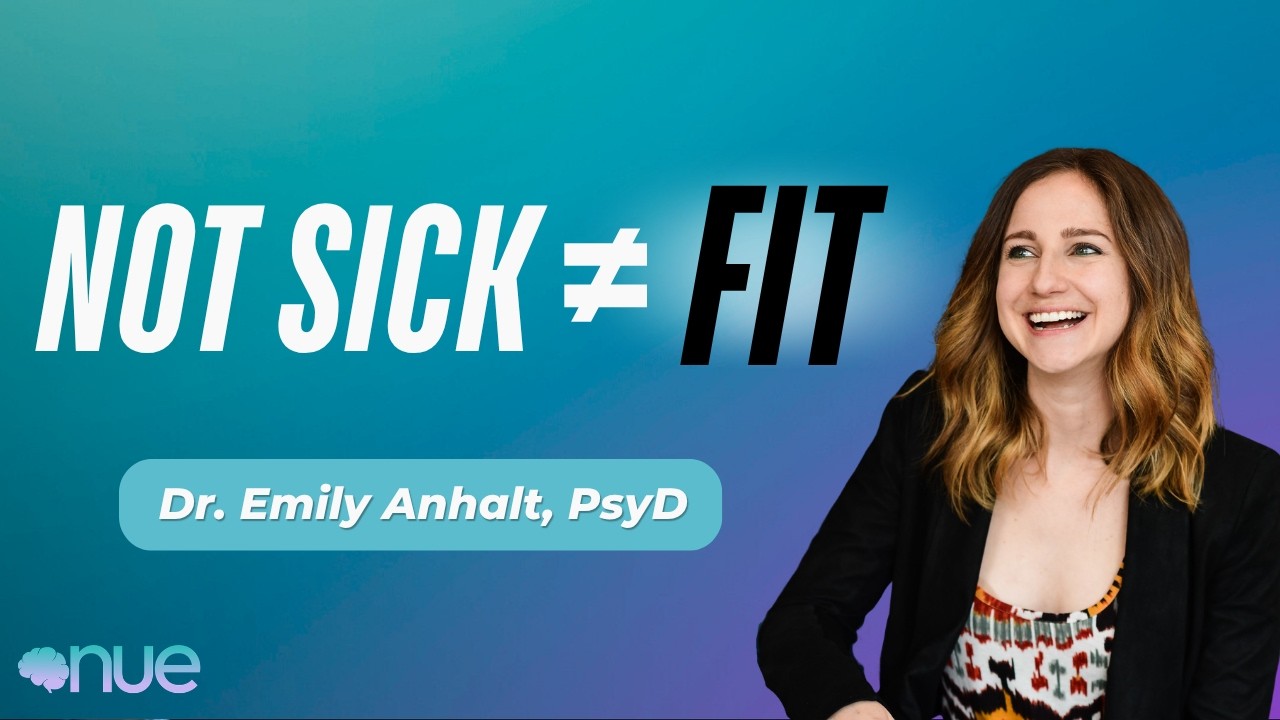
Most of us know there’s a difference between not being sick and being truly fit. You can go a year without catching a cold, but still get winded climbing stairs.
We don’t hold our emotional health to the same standard. As long as we’re not having panic attacks or breaking down, we call it fine and move on.
Dr. Emily Anhalt, a clinical psychologist and author of Flex Your Feelings, joined me on the Mental Fitness Podcast. Her main message is simple: train your emotional health like you train your body. Don’t wait for a crisis.
Why Emotional Fitness Matters
Dr. Anhalt was raised in Silicon Valley, where she also studied psychology. Many of her clients were high-achieving and successful, yet still struggled with their emotional health. They didn’t fit neatly into the categories of either mentally ill or mentally healthy. Most people, she found, are somewhere in between.
Research shows how crowded that middle ground is. In a national study of over 3,000 U.S. adults, sociologist Corey Keyes found about 17% were flourishing, 12% were languishing, and more than half were somewhere in between. I brought up Keyes’s work in our conversation.
To figure out what emotional health looks like in real life, Dr. Anhalt interviewed 100 psychologists and 100 entrepreneurs. She asked them how to recognize emotional health in someone. Their answers became her seven traits of emotional fitness.
Even the Emotionally Fit Struggle Sometimes
Even fit people get sick or injured, but their bodies recover faster. Dr. Anhalt says emotional fitness works the same way.
Take missing out on a promotion. Someone with less emotional fitness might push the disappointment down or let it consume them. They either get stuck in the feeling, or avoid it altogether.
Someone with more emotional fitness feels the same letdown but handles it differently. They might say, “I feel really disappointed. This is not what I was going for. I’m going to let myself feel bummed about this for a little bit, and then I’m going to figure out what I want to do from here.”
The difference is what happens between feeling and action. You accept what happened and keep moving forward.
The Seven Traits of Emotional Fitness
Here are the seven, in the order Dr. Anhalt teaches them:
- Mindfulness: becoming comfortable with discomfort
- Curiosity: choosing growth over defensiveness, asking questions, and accepting tough feedback
- Self-awareness: knowing your strengths, struggles, triggers, and biases, and accepting there’s a lot you don’t know about yourself
- Resilience: learning and growing after setbacks, because challenges change you and you can’t return to who you were before
- Empathy: allowing yourself to feel some of what another person feels
- Communication: stating your needs and boundaries so small problems don’t become big ones
- Playfulness: being a “yes, and” person who creates space for connection
The order matters. Mindfulness comes first because facing your emotions can be uncomfortable, just like physical exercise. Practicing mindfulness helps you stay with that discomfort long enough to grow stronger.
Why Self-Awareness Is Harder Than You Think
Self-awareness is the trait people overestimate most. Dr. Anhalt points to research by organizational psychologist Tasha Eurich, whose team found about 95% of people think they’re self-aware, but only an estimated 10% to 15% actually are.
Dr. Anhalt’s explanation makes sense. We know a lot about ourselves and can spot what others miss about themselves. But we rarely see what others notice about us that we miss.
That’s why curiosity comes before self-awareness on her list. Learning about yourself means asking questions and being open to hearing things you hadn’t noticed before.
Dr. Anhalt put me to the test on the show. When she asked for my biggest strength, I almost said self-awareness, but switched to curiosity because of that 95% number. Communication is the one I’ve had to work on most.
Empathy Works Best With Boundaries
Dr. Anhalt makes a clear distinction: understanding someone’s sadness is sympathy; feeling some of it with them is empathy.
She often hears from people who say they have too much empathy. They feel everyone’s feelings and end up responsible for them all. In her experience, these people usually need stronger boundaries, not less empathy.
She uses therapy as an example. It depends on empathy, but is also one of the most boundaried relationships. Sessions have clear start and end times, and the therapist isn’t the patient’s friend. Those firm boundaries make the work possible.
The same idea applies to friendships, marriages, and teams. Be clear about what you can give, and don’t offer more. Feeling someone’s sadness doesn’t mean you have to fix it.
She’s honest that this takes practice. Early in her training, she struggled to sit with patients who were angry. She realized the real issue was her own discomfort with anger. Once she worked through that, sitting with others’ anger became easier.
Communication Fails When We Expect Mind Reading
I asked her where communication breaks down most between people who care about each other. Dr. Anhalt answered: mind reading. We expect those close to us to just know what we want. Some of us even feel that asking for it makes it not count.
But people can’t read minds. The key is to say what you want and need out loud, and give the other person a real chance to meet it or say no. Either way, it’s clear.
The Only Emotional Fitness You Can Control Is Your Own
People often ask Dr. Anhalt how to get someone else to work on their emotional fitness, like a boss or partner. Her answer: you can’t. What works is doing your own work and talking about why it’s helped you. That gives others permission to start.
Teams work the same way. Emotionally fit teams have an “us versus the problem” mindset, not “me versus you.” That starts with each person working on themselves, then supporting each other. With leaders, she tends to start with mindfulness: What makes you uncomfortable, and how could you lean into it a bit instead of away?
Playfulness is her favorite trait, and it’s also one she sees people neglect. This trait relies on the foundation of all the others. People only feel free to play when they feel safe. To learn more about this, check out our article on why adults stop playing.
Signs Your Emotional Fitness Is Improving
Some people feel a difference right away. For others, change comes after working through discomfort. Dr. Anhalt says consistency matters most.
Pay attention to the pause between what you feel and how you respond. You may still feel angry, but with practice, you can choose to act thoughtfully instead of reacting impulsively. The same goes for anxiety. You can learn to tolerate uncertainty instead of trying to make it go away immediately. Over time, she says, you’ll start to speak to yourself more kindly and feel more satisfied with life. As I said on the show, others may notice the change before you do.
Six Simple Emotional Fitness Exercises
On the show, we call small exercises like these reps. Dr. Anhalt’s version starts with something that’s harder for you than for most people.
- Name your discomfort. Pick one thing you tend to avoid that isn’t hard for everyone, like saying no, handling conflict, giving tough feedback, or talking about yourself.
- Take one small step toward it. Choose something you can do this week, and do that instead of avoiding it.
- Buy yourself a beat. If saying no is hard, try “Let me think about that” instead of an automatic yes.
- Share one thing about yourself. If talking about yourself is uncomfortable, tell a friend or coworker one interesting fact about you.
- Say one need out loud. Pick something you’ve been hoping someone would notice, ask for it plainly, and let them answer.
- Open a serious talk with something light. Dr. Anhalt likes to start hard conversations with a quick icebreaker, like “If you were a kitchen utensil, which would you be and why?” Hers is a whisk.
Bad days will still come. With practice, you meet them stronger.