The first time I heard Dr. Judson Brewer say most people don’t eat because they’re hungry, I thought that sounded ridiculous. I believed I only ate when hungry. I just felt hungry a lot, I thought.
Dr. Brewer is a neuroscientist and addiction psychiatrist at Brown University. He wrote The Hunger Habit, a book on eating habits. I read it before he joined the Mental Fitness Podcast and tried his advice: before grabbing a snack, I paused to check in with myself.
He was right. Stressful meeting? I went to the pantry. Tough week? I reached for comfort food. Noticing this pattern helped me change it.
This shift, from “Why can’t I stop this?” to “What is this?”, is what my co-host Luke Olson and I discuss this week. The idea is simple: treat your habits like experiments. Run small tests to see what works for you.
Why quick fixes leave us blaming ourselves
Most of us have tried a fix that claims to change everything, like a new routine or a gratitude journal that lasts a week.
When the fix fades, we blame ourselves. The book had all the answers, so the problem must be us. We search for the next fix, rarely asking why the last one failed.
Some things work for nearly everyone: sleep, movement, good food, and time with people you care about. These are your constants. Get them steady first, then experiment with the rest.
Two kinds of curiosity
Curiosity can be helpful, but sometimes it only makes us anxious.
In 2006, psychologists Jordan Litman and Paul Silvia described two types of curiosity. Deprivation curiosity feels like an itch. You need to look up an actor’s name you can’t remember just to get relief. Interest curiosity is like a kid taking apart a flashlight to see how it works. The process itself is rewarding.
“What’s wrong with me?” is the itch. There’s no answer that will satisfy it. “I wonder what happens if…” is the flashlight. It leads you to experiment and learn.
Dr. Brewer bases much of his work on this difference. He calls curiosity “the bigger, better offer” because it feels better than anxiety. In a 2021 study of adults with generalized anxiety disorder, people who used his Unwinding Anxiety app along with their usual care saw their anxiety drop by 67% in two months. Usual care alone dropped it 14%. The app teaches you to map your habits and meet them with curiosity.
Small wins build belief
You can tell yourself you’re capable in the mirror each morning. It might help for an hour.
In 1977, psychologist Albert Bandura introduced self-efficacy, the belief you can do something in a certain situation. He listed four sources: being told you can, seeing someone like you do it, how your body feels, and actually doing it. Actually doing it, called mastery experience, is the strongest.
As a parent, I often tell my kids, “You can do it.” It helps a bit, but they only believe it once they’ve done it themselves. (More on this in our episode about building confidence.)
Keep each experiment small enough for your worst day. If it takes a lot of willpower, it’s too big. You are collecting evidence, one piece at a time.
Anyone can get more curious
I used to think curiosity was just a personality trait, something you either have or you don’t.
Research shows you can train curiosity. A 2023 review of 41 studies found that curiosity-building programs work, especially those using games or mystery.
“I wonder what happens if…” is a game you can play with yourself.
Ask “what” questions
Organizational psychologist Tasha Eurich found that highly self-aware people ask “what” far more than “why.” In her team’s interviews with them, “what” showed up over 1,000 times, while “why” appeared fewer than 150.
“Why” invites a story. When I asked why I kept snacking, I always landed on “I lack discipline.” Asking what happened right before gave me real answers: a long day, a hard meeting, then the pantry.
Harvard psychologist Robert Kegan describes a similar shift in adult growth. We start by measuring ourselves against outside standards. Over time, some of us learn to keep those expectations at a distance and set our own. Scientists read others’ work, but they also run their own experiments.
Benjamin Franklin’s little book
While preparing for this episode, I revisited a story from Franklin’s biography.
In his twenties, Benjamin Franklin set out to improve his character. He picked 13 virtues like temperance, order, sincerity, and humility. He made a small book with a page for each one. Each night, he marked every fault with a black spot. He focused on one virtue per week, cycling through all 13 four times a year.
He never mastered order and admitted it later in life. But he wrote that he fell far short of perfection, “yet I was, by the endeavour, a better and a happier man.”
I love that he added “happier.” The joy comes from making progress, even if you never finish.
Franklin also tells a story about a man who wants his whole ax polished. He turns the grindstone himself, tires of it, and decides he likes a “speckled” ax best. Franklin’s point: we quit, then tell ourselves the speckled version is what we wanted all along.
Day three of an experiment is like the speckled ax. Keep going.
Put it into practice
Try a 14-day experiment
- Ask one question. Write: “I wonder what happens to my mood if I…” Any answer is useful.
- Pick one variable. Change just one behavior. Make it small enough for your worst day. If you change five things at once, you won’t know what mattered.
- Name your constants. Write down two or three basics you’ll keep the same, like your bedtime or meals, so you notice if they drift.
- Set an end date. Run the experiment for 14 days and mark the end on your calendar. Three days is noise. Two weeks starts to show a signal.
- Measure something visible. Each day, write whether you did it (yes or no) and jot one word about what happened after. Feelings can lag behind behavior by weeks.
- Read the results. On day 14, review what happened and what surprised you. Decide if you’ll keep the change. If nothing happened, that’s still an answer. Pick a new variable and try again.
Ready to start your practice? Meet NUE →
Not ready for an app? Follow the podcast on Instagram for one idea from every episode.

Scan to open NUE on your phone
Three experiments to start with
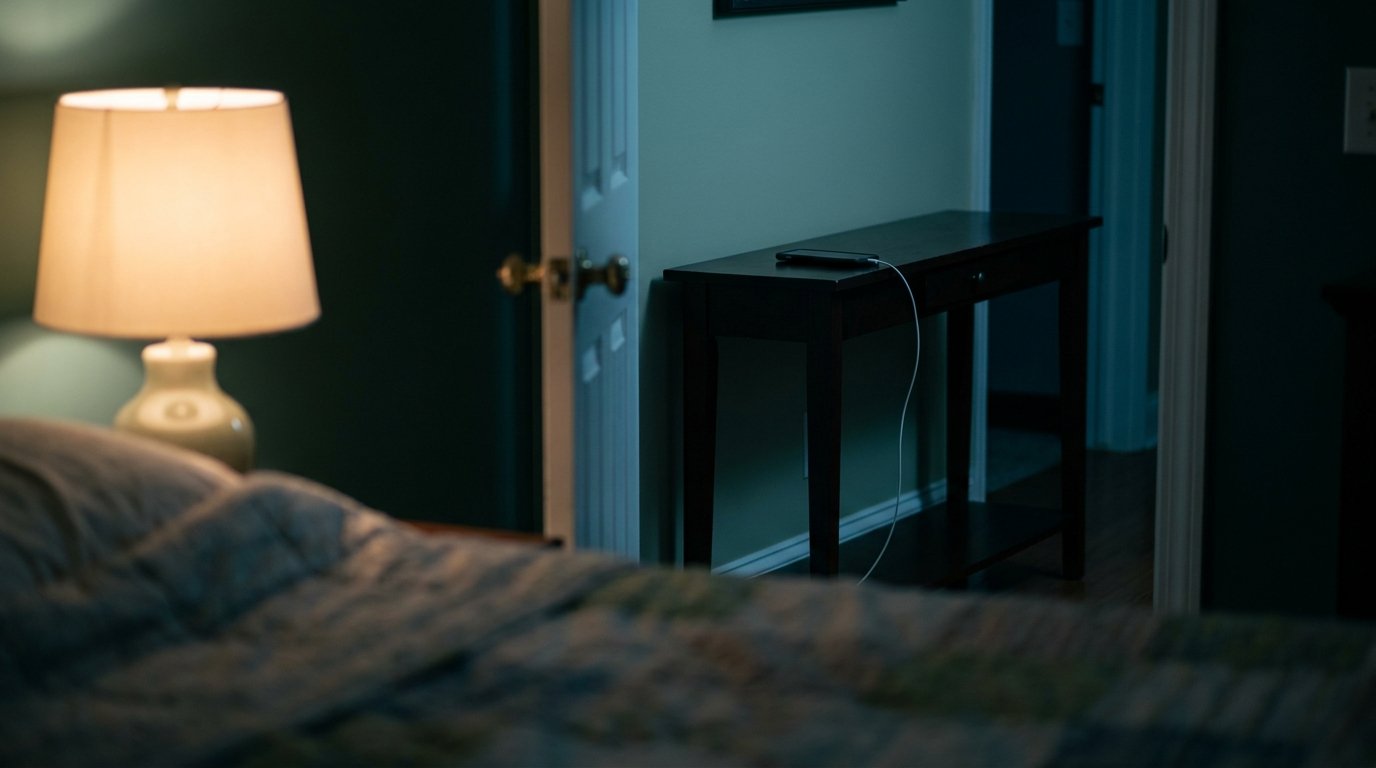
Put your phone in another room at dinner. The meal and people stay the same; only the phone moves. Afterward, write what happened at the table.
Take a short walk after lunch, five to 15 minutes. Keep sleep and meals the same. Write one word for your energy at 3 p.m.
Write three lines before bed. Jot down thoughts from the day or tomorrow’s to-do list. Keep your bedtime the same. Then note how fast you fell asleep. My guess is you’ll fall asleep faster once your mind knows the list is somewhere safe.
Start tonight
Most of us run experiments all the time. We just don’t write them down. When we skip that step, every miss feels like a failure.
Grab a notebook and pencil, like Franklin did. Where you are today is just one data point. That’s where your first experiment begins.