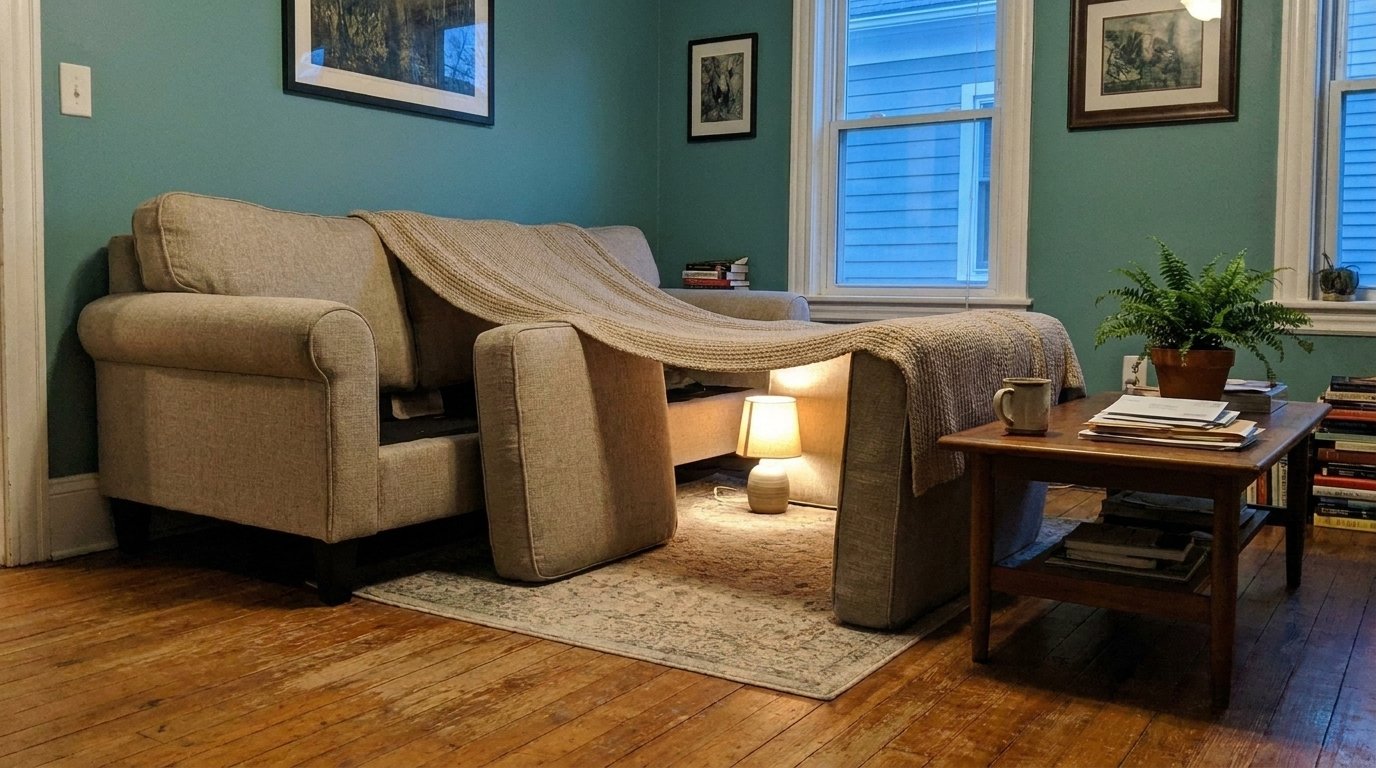
My co-host Luke Olson opened this week’s episode with a question I couldn’t answer quickly. When was the last time you did something only because it was fun, not because it was healthy and not to get better at it?
Ask a five-year-old what they do for fun and you’ll get 20 answers. Ask a 45-year-old and they have to stop and think.
Somewhere along the way, we start thinking adults should be productive while play is for children. I think that’s backward. Play might actually be key to a fulfilling adult life.
What counts as play
You can’t always tell play by the activity. Two people can cook the same dinner, and for one it’s play while for the other it’s a chore. Running can be play, or it can be a number on your watch.
Play is more about how you relate to an activity. It’s something you choose and enjoy just because it’s fun. You get absorbed in it, and the outcome doesn’t really matter.
Adults are experts at turning fun into work. We measure, track, and compete. Sometimes, even our downtime starts to feel like a chore.
Why animals play
From an evolutionary point of view, play is strange. Young animals spend energy chasing and wrestling, sometimes at real risk, with no obvious payoff.
Three biologists who study animal play, Marek Špinka, Ruth Newberry and Marc Bekoff, offered one explanation in a 2001 review: play is training for the unexpected. Animals at play keep putting themselves in spots where they briefly lose control, and they practice recovering. People may be doing the same thing.
What 125 playful memories have in common
In a 2026 study, researcher Leland Masek interviewed 82 young adults from 42 countries about their most playful experiences, 125 memories in all. When people described what those moments did for them, four kinds of benefit kept coming up: positive emotion, relief from stress, closer bonds with other people, and learning about themselves and others.
That list reads a lot like a description of mental fitness.
A quick note: This research is based on people’s stories, and most studies show connections rather than proof. There’s no magic formula, no guarantee that 30 minutes of play will boost your mood by a set amount. But play does seem to create the right conditions for curiosity, connection, and adaptability.
Feynman and the wobbling plate
One of my favorite stories about play comes from the physicist Richard Feynman.
After the Manhattan Project, Feynman burned out. Physics had stopped being fun, and he kept worrying about whether his problems were important enough.
So he decided to stop worrying about importance and play with physics again. Soon after, someone in the Cornell cafeteria tossed a plate into the air. Feynman noticed that the plate wobbled at one rate while the Cornell emblem on it went around at another.
He had no reason to work out why, and he did it anyway because it was fun. In his memoir, Surely You’re Joking, Mr. Feynman!, he wrote that the diagrams and the work that later won him the Nobel Prize grew out of that playing around with the wobbling plate.
That’s the paradox of play. Sometimes play leads to great results exactly because you weren’t trying to be productive. “I need to get it right” and “I wonder what happens if...” are completely different mindsets. That second approach matters for habits, too.
Why we stop playing
If play comes naturally to children, what happens to the rest of us? I see three main reasons.
Productivity. As adults, we tend to measure time by what we achieve. Play feels almost rebellious, because sometimes there’s nothing to show for it except that you enjoyed yourself.
Self-consciousness. Kids dance and make up silly games without worrying how they look. As adults, we get self-conscious and wonder if we’re any good. Play needs space to let go and not care for a while.
Turning play into achievement. Maybe you start cycling for fun, but soon you’re tracking every ride and chasing personal bests. You pick up painting, and suddenly someone suggests you should sell your art.
Getting better at something builds confidence, and mastery feels great. But not everything needs a scoreboard. Excellence and fun can go hand in hand. Steph Curry is one of the best basketball players ever, but you still see him laughing and joking during games.
Play and entertainment are different
Video games and surfing can both be play, but there’s a difference between doing and just watching. Watching a show can be relaxing, but enjoying something isn’t the same as playing.
Rest helps you recover energy. Play often gives you energy, and you finish feeling more alive. Who you play with matters. Video games with friends can be real play, but long solo sessions might just feel numbing.
How play builds friendships
Eight-year-olds don’t build friendships by talking about their feelings. They play together by riding bikes, tossing a ball, or inventing games. That’s how connection happens naturally.
Many adults wish they had more friends. The better question is: Where do I actually play with other people? Adult hangouts often turn into just talking, but friendships also need shared fun and activity.
Play in a long marriage
Heather and I are in our 25th year of marriage and have raised a big family. Over time, couples can start to sound less like people in love and more like coworkers running a household. Who’s picking up the kids? What’s for dinner?
Those conversations matter, but the risk is getting so good at managing life that you forget how to enjoy it together.
Research shows new experiences help couples feel closer. In one study, couples who tried something new together felt a bigger boost in their relationship than those who did something routine.
Keep your date nights, but if every Friday is the same, it can start to feel routine. Try something new, such as a cooking class, kayaking, or an escape room. You’ll probably mess up, laugh, and see a new side of each other.
Humor works the same way. A review of 39 studies found that the humor couples create together is tied to feeling closer. Jokes at each other’s expense do the opposite. If you often say, “Come on, I was just joking,” it might not be the helpful kind.
Early in a relationship, everything is new. Years later, security matters, but it can turn into predictability and boredom. You don’t need a new relationship to find novelty. You need new experiences together.
Put it into practice
Try the PLAY framework this week
“Play more” is good advice, but it’s not specific. So, Luke and I created a simple framework that spells PLAY.
- P stands for Past. Think back to what you loved doing before you worried about being good at it. What grabbed your attention at age eight, twelve, or eighteen? If you liked building forts, maybe you’d enjoy woodworking now.
- L stands for Lower the stakes. Choose an activity where the only rule is you don’t have to be good at it. Don’t measure or track your progress. Just have fun.
- A stands for Add something. Try something new, or invite someone to join you. Couples can pick an activity neither of them knows, so it’s new for both.
- Y stands for Yes. Schedule your play within the next week. “We should do something fun sometime” usually leads nowhere. Decide what, when, and with whom. Even 30 minutes is plenty.
For your first try, stick to three rules: You picked the activity. You’re doing it mostly for fun. And you’re not allowed to justify it by how productive or healthy it is.
Ready to start your practice? Meet NUE →
Not ready for an app? Follow the podcast on Instagram for one idea from every episode.

Scan to open NUE on your phone
We took a walk somewhere new
Heather and I walk most evenings, on a route we’ve walked hundreds of times. One evening, I suggested we walk somewhere we’d never been. We drove about 10 minutes to a wooded area with trails neither of us knew and started exploring.
We talked the way we always do, logistics first and then deeper things. Weeks later, I still remember that walk vividly, and I can’t describe last week’s walks in nearly as much detail.
We spend a lot of adulthood trying to be more productive and disciplined. That matters. But mental fitness also means building a life you enjoy living.
So this week, as you handle your to-do list, ask yourself a simple question: What would be fun?